
APHIS-PPQ Reports Progress Toward Spotted Lanternfly Biological Control
August 12, 2026
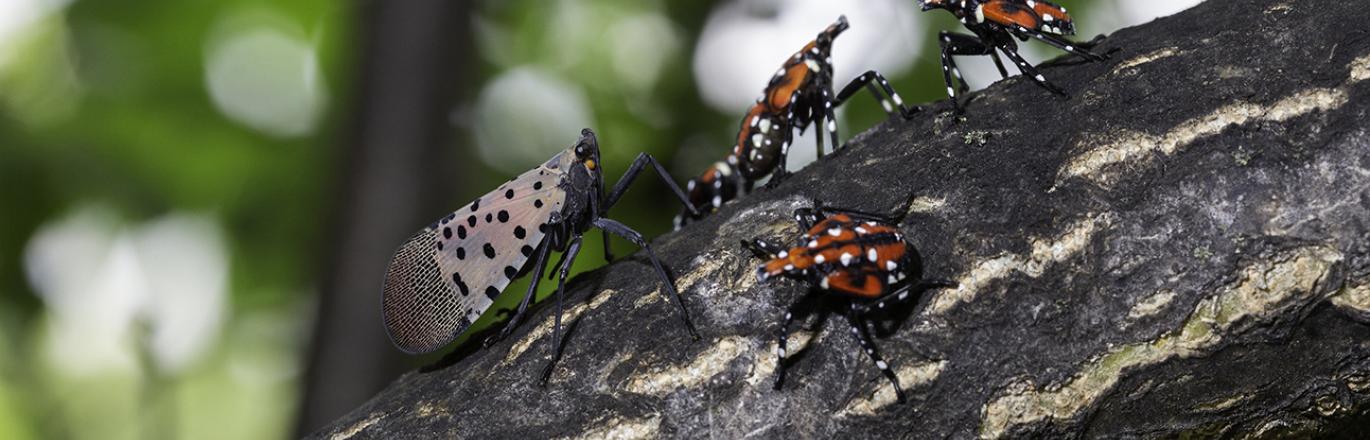
During a recent meeting with USDA's Animal and Plant Health Inspection Service, Plant Protection and Quarantine (APHIS-PPQ), agency officials reported that researchers are very close to completing the work necessary to seek approval of a biological control agent for spotted lanternfly (SLF). The prospective biological control is a parasitic wasp that attacks spotted lanternfly, potentially providing another long-term tool for suppressing populations of the invasive pest.
The development is particularly important because spotted lanternfly has spread rapidly across the United States since it was first detected in Berks County, Pennsylvania, in 2014. USDA-APHIS currently reports established populations or some degree of infestation in 19 states and the District of Columbia: Connecticut, Delaware, Georgia, Illinois, Indiana, Kentucky, Maryland, Massachusetts, Michigan, New Jersey, New York, North Carolina, Ohio, Pennsylvania, Rhode Island, South Carolina, Tennessee, Virginia and West Virginia. What began as a localized infestation in southeastern Pennsylvania has now expanded throughout much of the Mid-Atlantic and Northeast and moved west into the Midwest and south into the Southeast.
The pest's ability to spread long distances is one of the reasons containment has proven so difficult. SLF is an effective hitchhiking pest, laying egg masses on vehicles, trailers, railcars, firewood, outdoor furniture, equipment and other hard surfaces that can subsequently be transported hundreds of miles. APHIS specifically advises businesses and travelers moving through infested areas to inspect vehicles, shipping containers, pallets and other outdoor items before moving them.
The continuing geographic expansion also underscores the importance of California's pest-exclusion and early-detection system. California is not currently among the 19 states APHIS identifies as having established SLF populations, but the pest poses a particular concern because it feeds on grapevines, stone fruits and other crops important to California agriculture. Preventing establishment remains far less costly and disruptive than managing the pest after it becomes widely established.
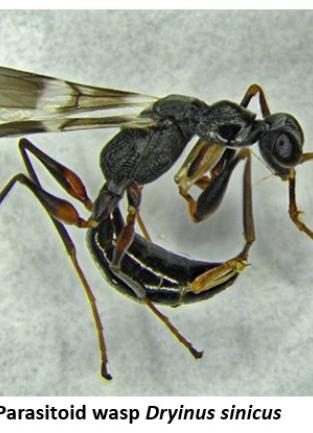
Public USDA research identifies Dryinus sinicus, a parasitic wasp that attacks spotted lanternfly nymphs in its native range in Asia, as a promising biological control candidate currently being evaluated for possible introduction in the United States. USDA researchers published additional work on the species in April 2026 examining its ability to locate and attack different spotted lanternfly life stages.
APHIS officials indicated that the critical remaining issue is ensuring that release of the wasp would not cause unacceptable harm to native U.S. species. Before an imported biological control organism can be released, researchers conduct extensive host-range and host-specificity testing to determine whether the organism could attack non-target native insects.
That safeguard is particularly important because another spotted lanternfly biological control candidate, the egg parasitoid Anastatus orientalis, was found capable of attacking several native species and is now considered unlikely to receive approval for release. The experience illustrates why APHIS must complete rigorous non-target testing before authorizing a new biological control organism.
For California, successfully completing this work could be significant. Having a safe biological control agent approved before spotted lanternfly becomes established in the state could provide federal, state and county pest-prevention officials with another important tool if an introduction cannot be eradicated or contained. The rapid spread of SLF from a single Pennsylvania infestation to 19 states in little more than a decade demonstrates how quickly the management challenge can change once an invasive pest establishes itself.
The APHIS update is encouraging, but the biological control agent has not yet been approved for environmental release. Completion of the remaining native-species safety testing and federal regulatory review will determine whether the wasp can ultimately become part of the nation's spotted lanternfly management strategy.